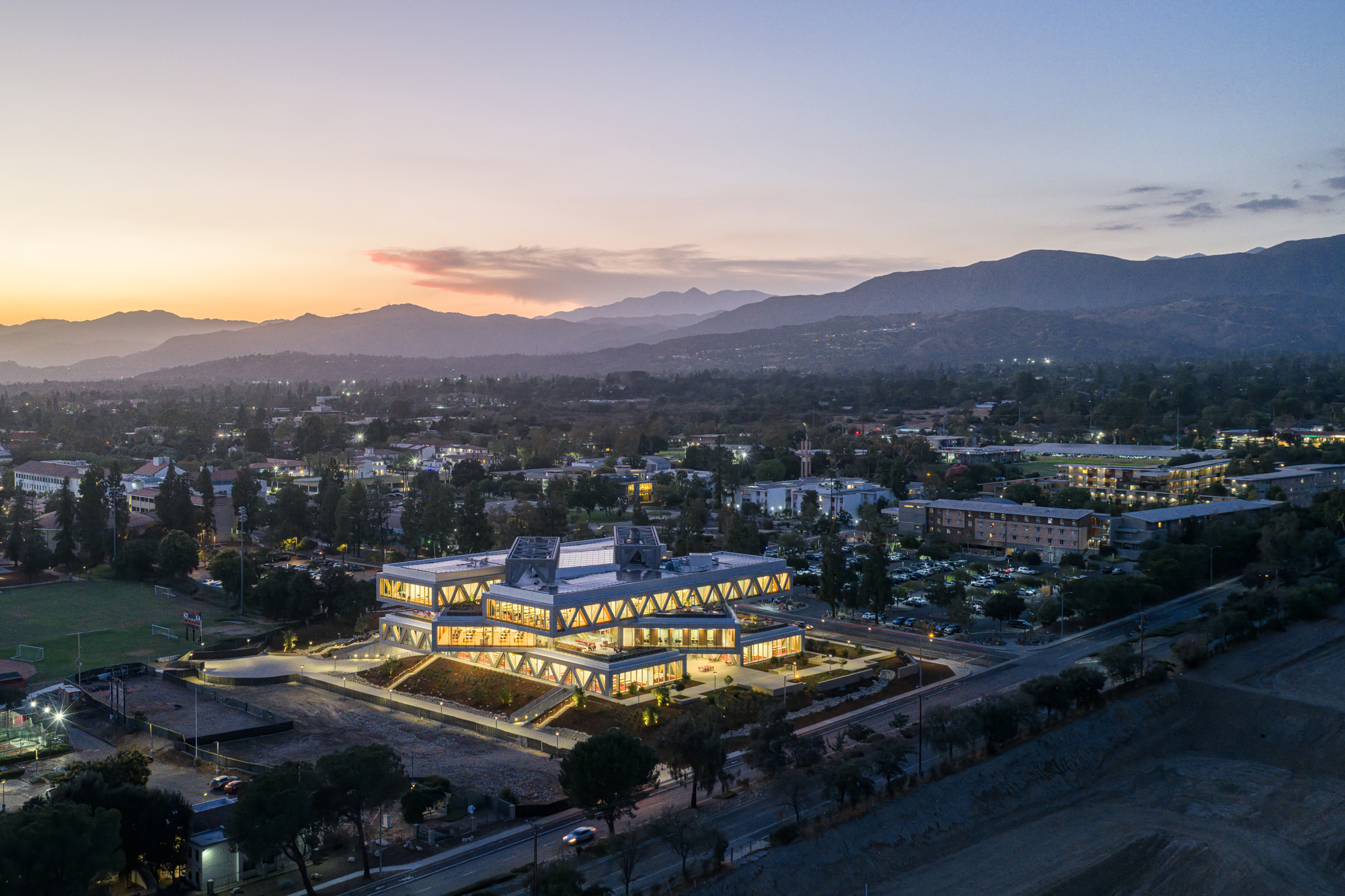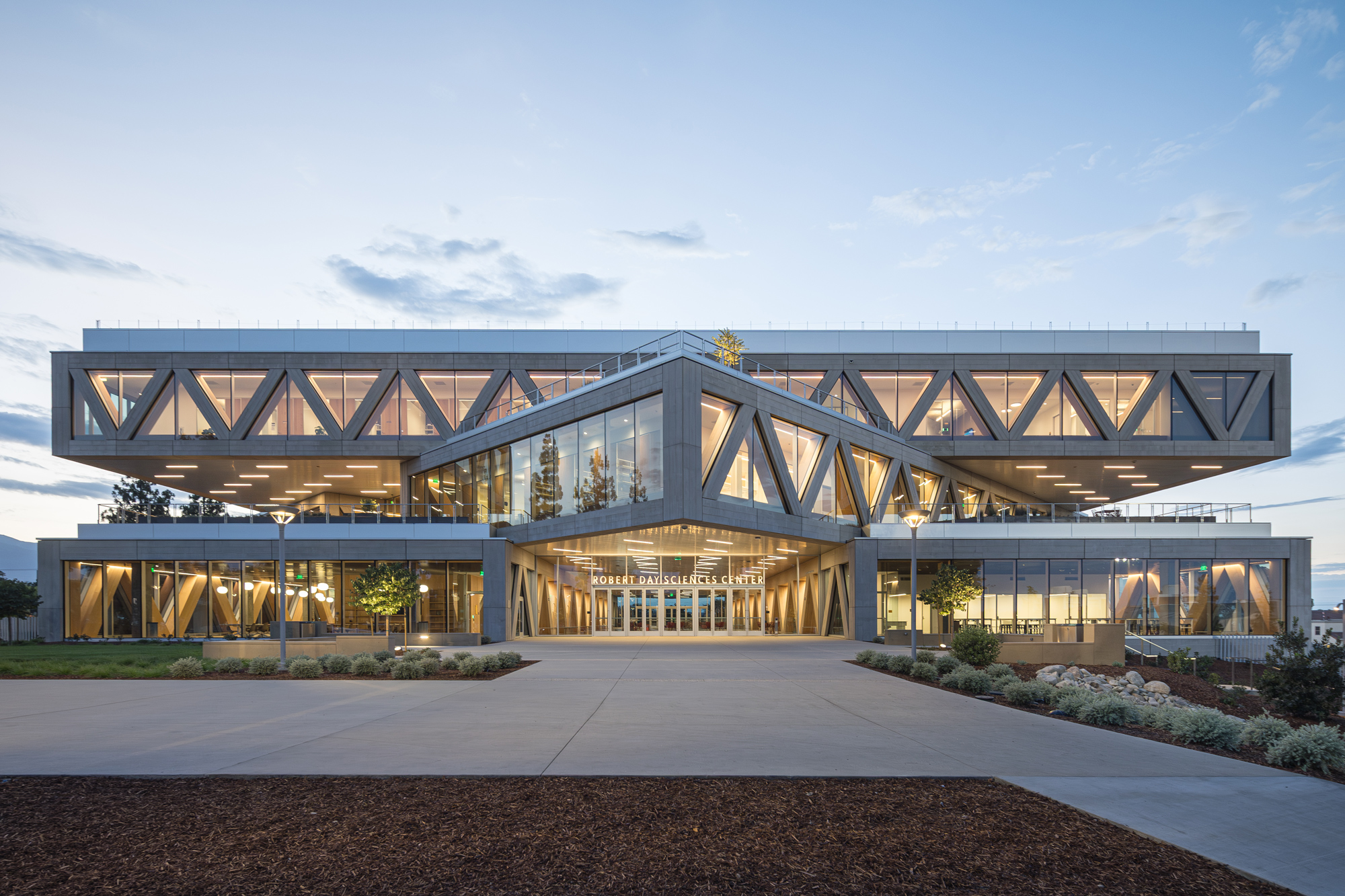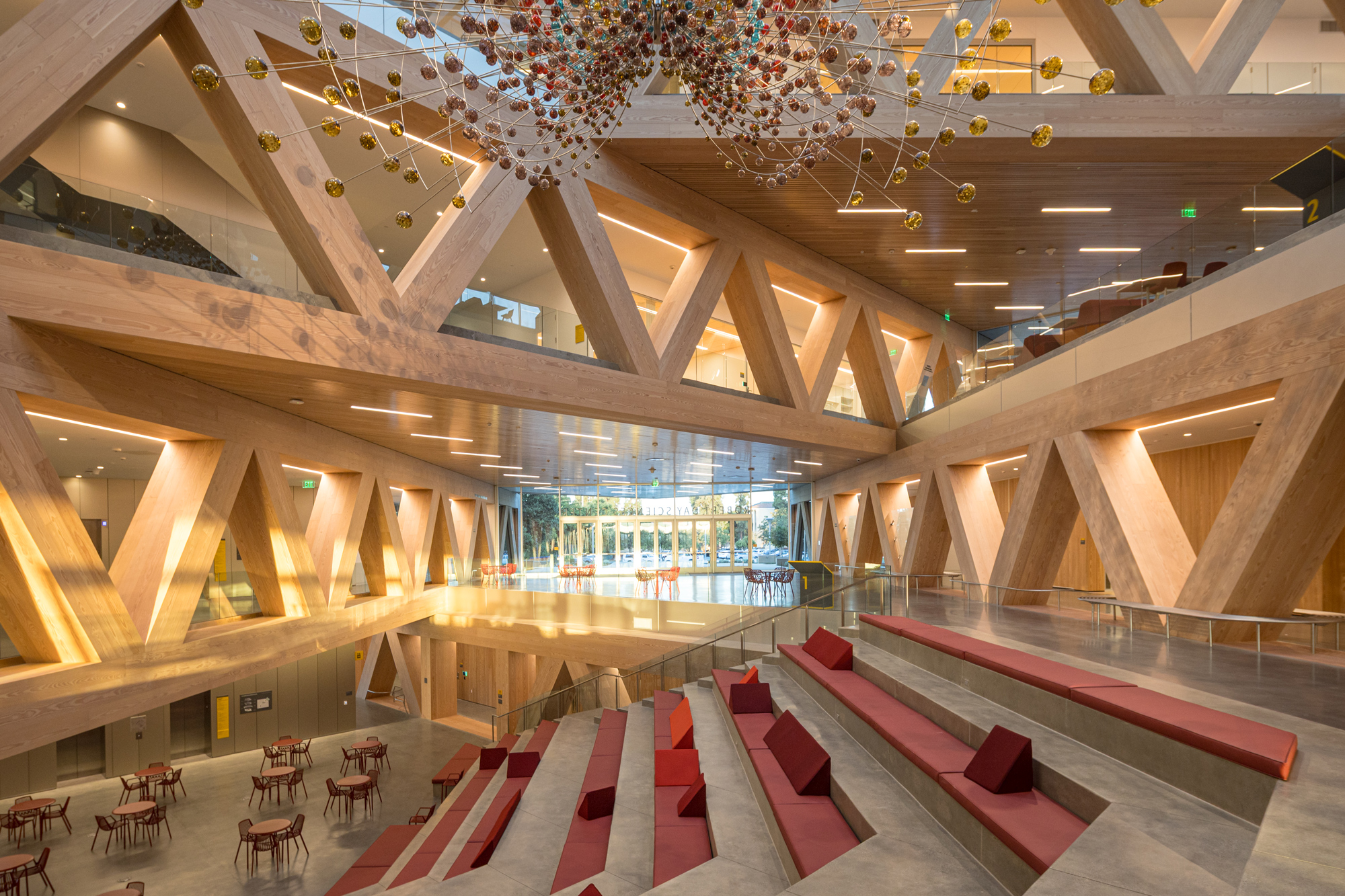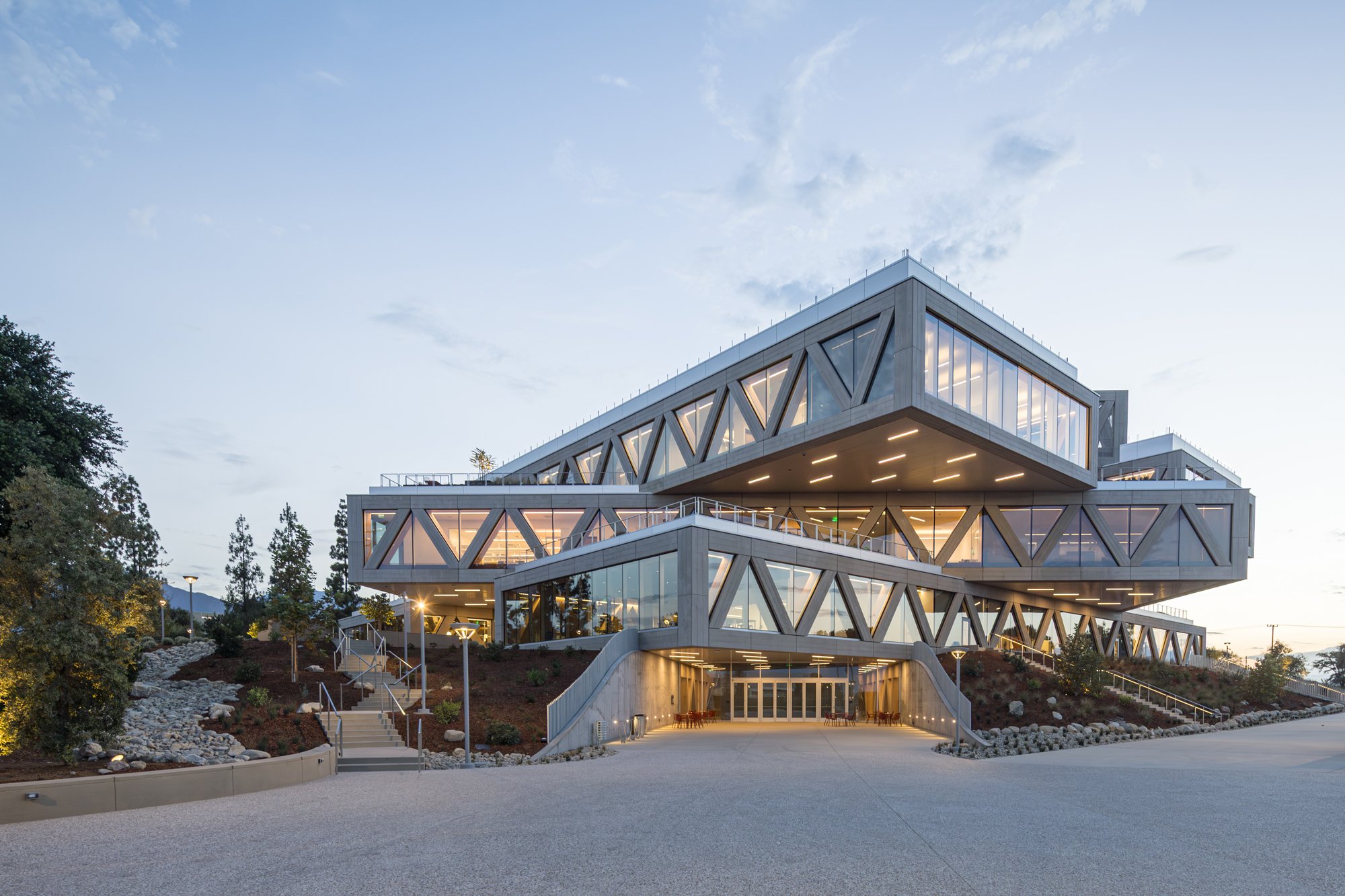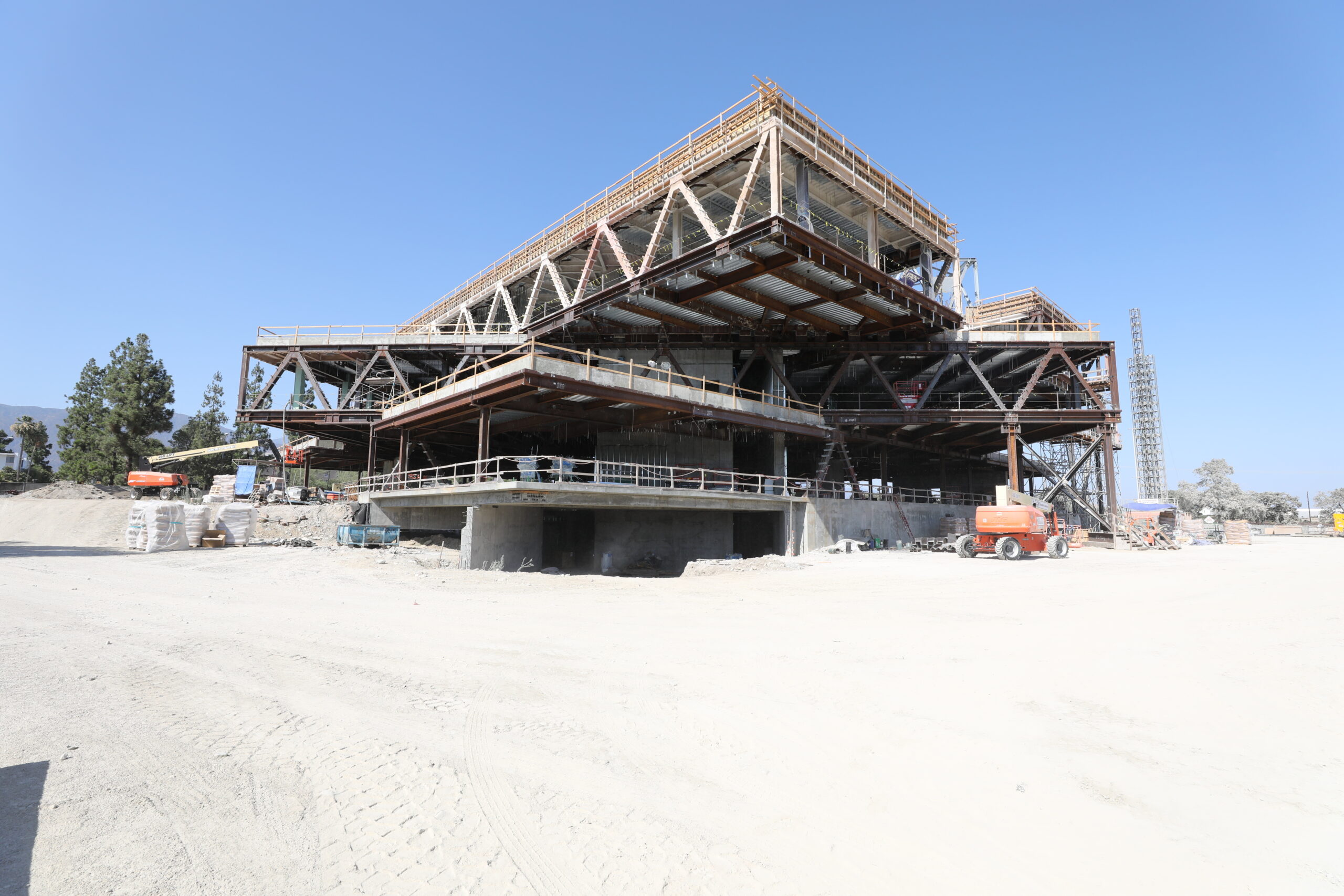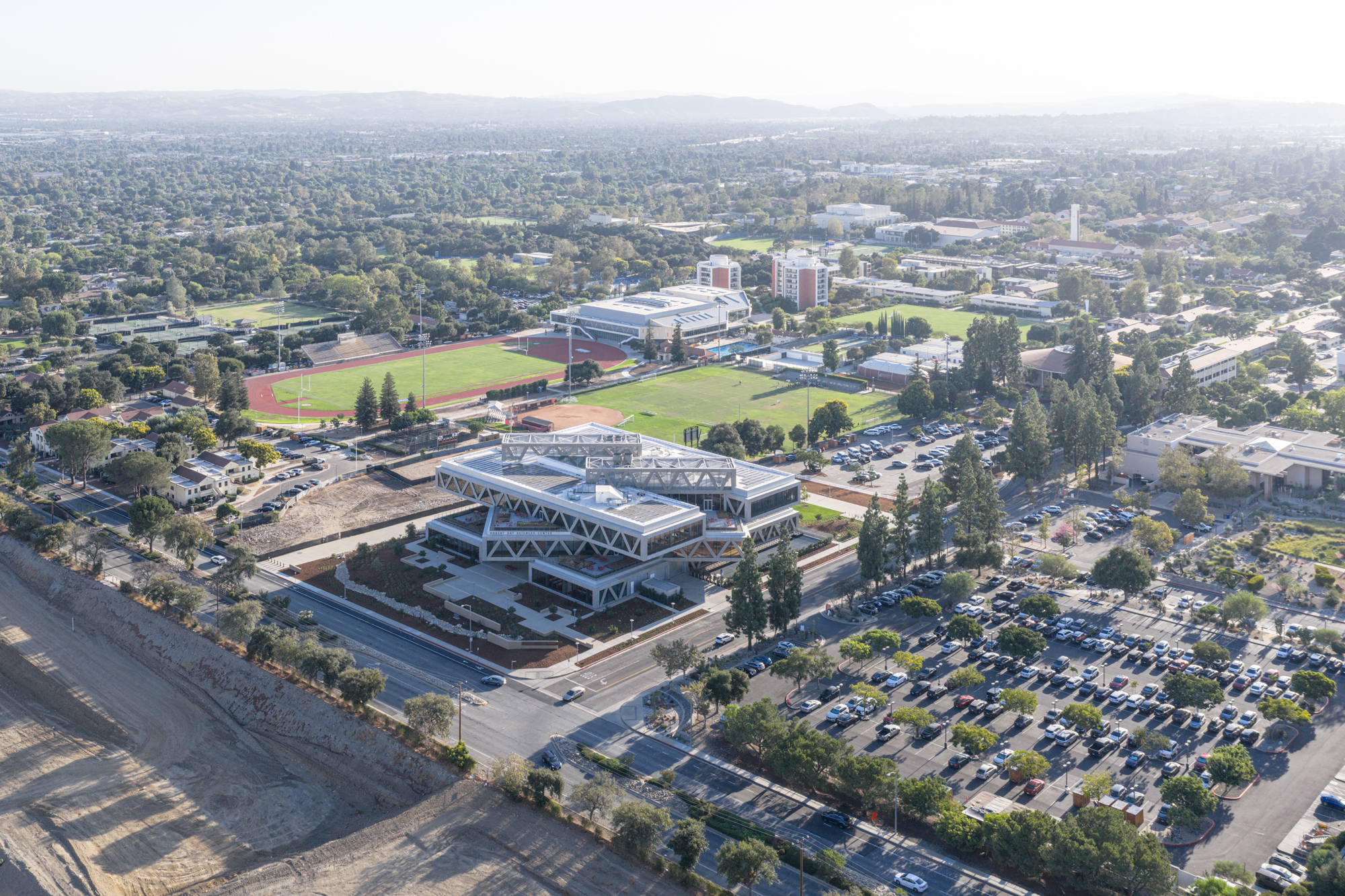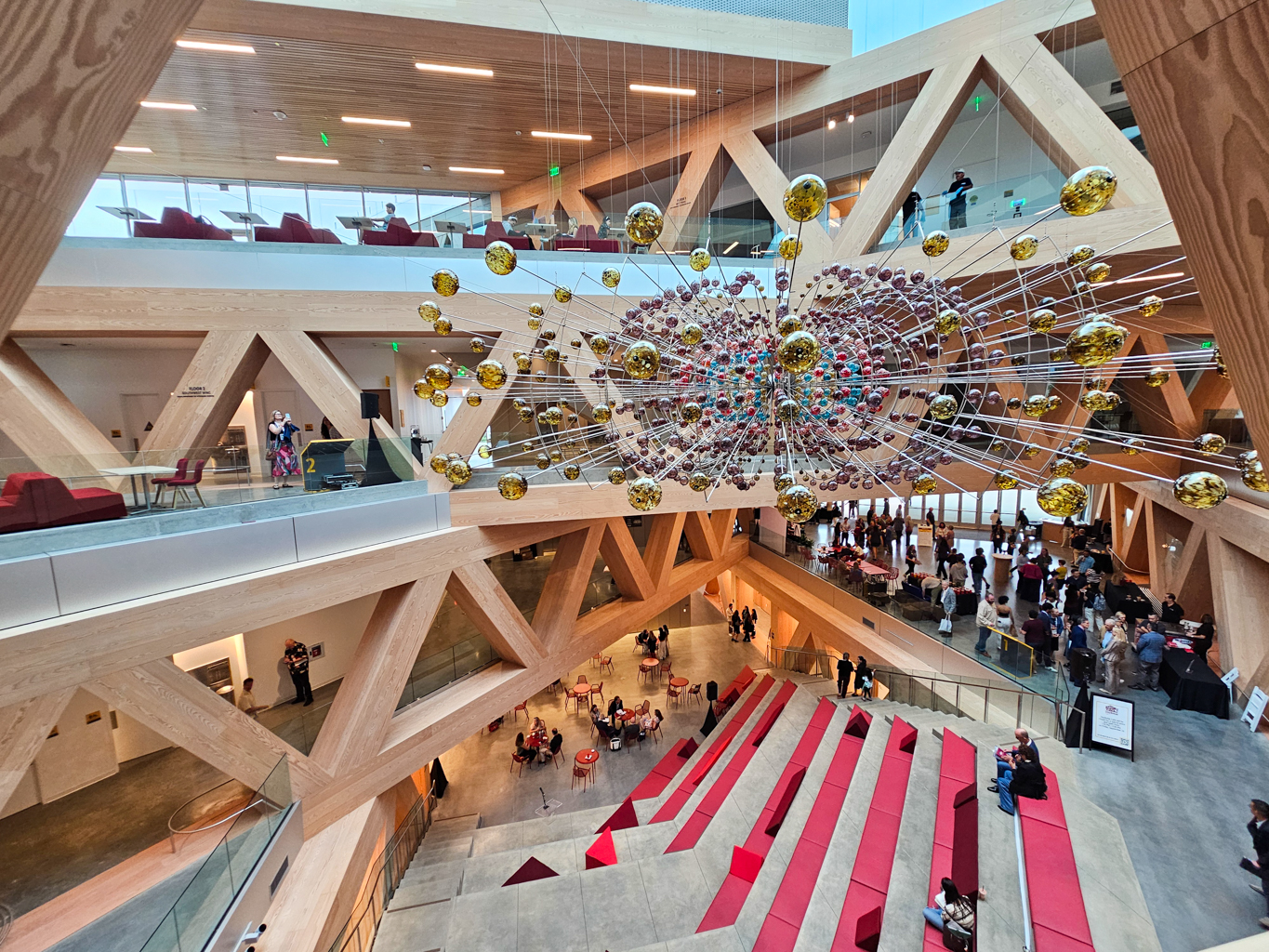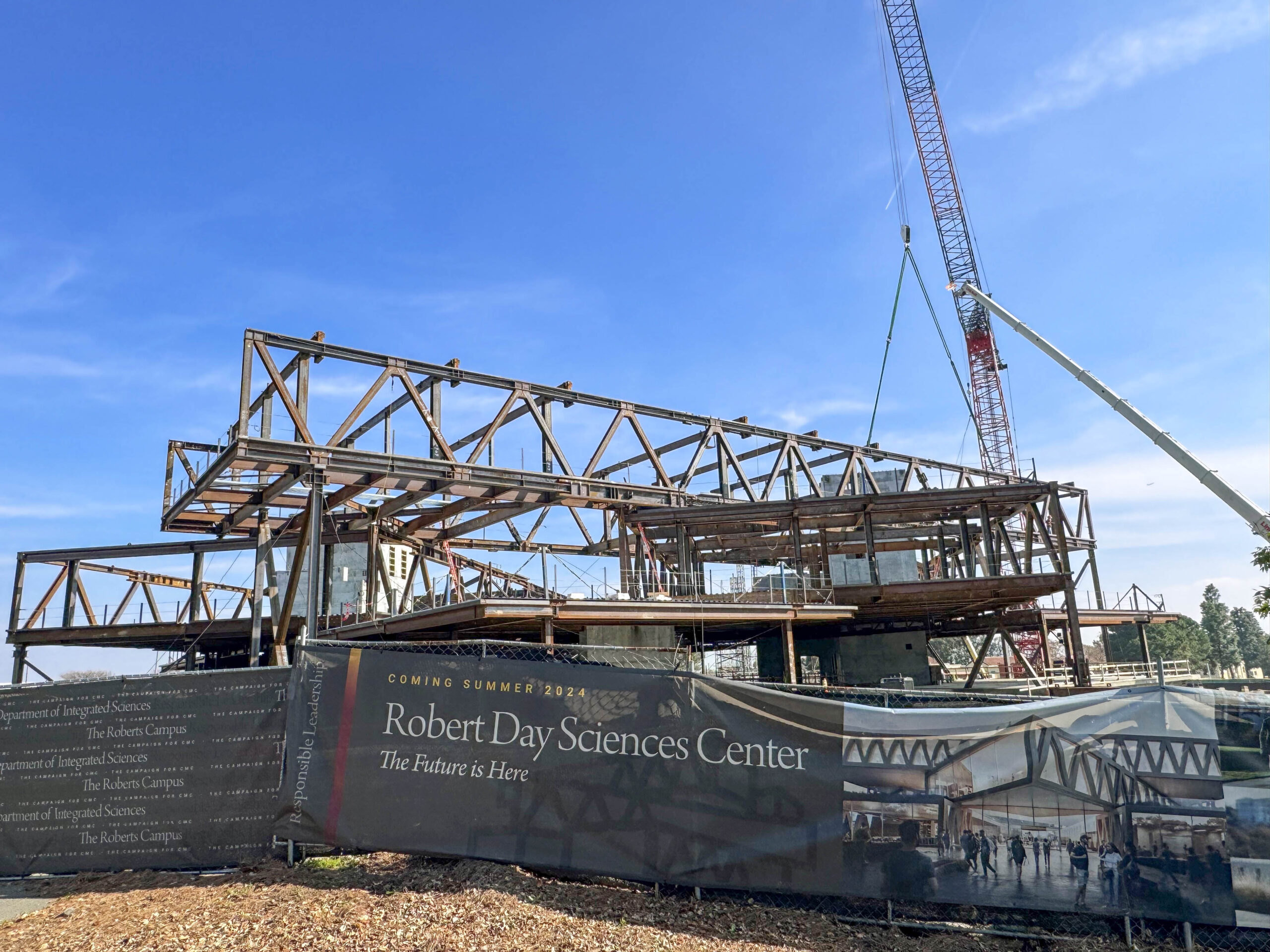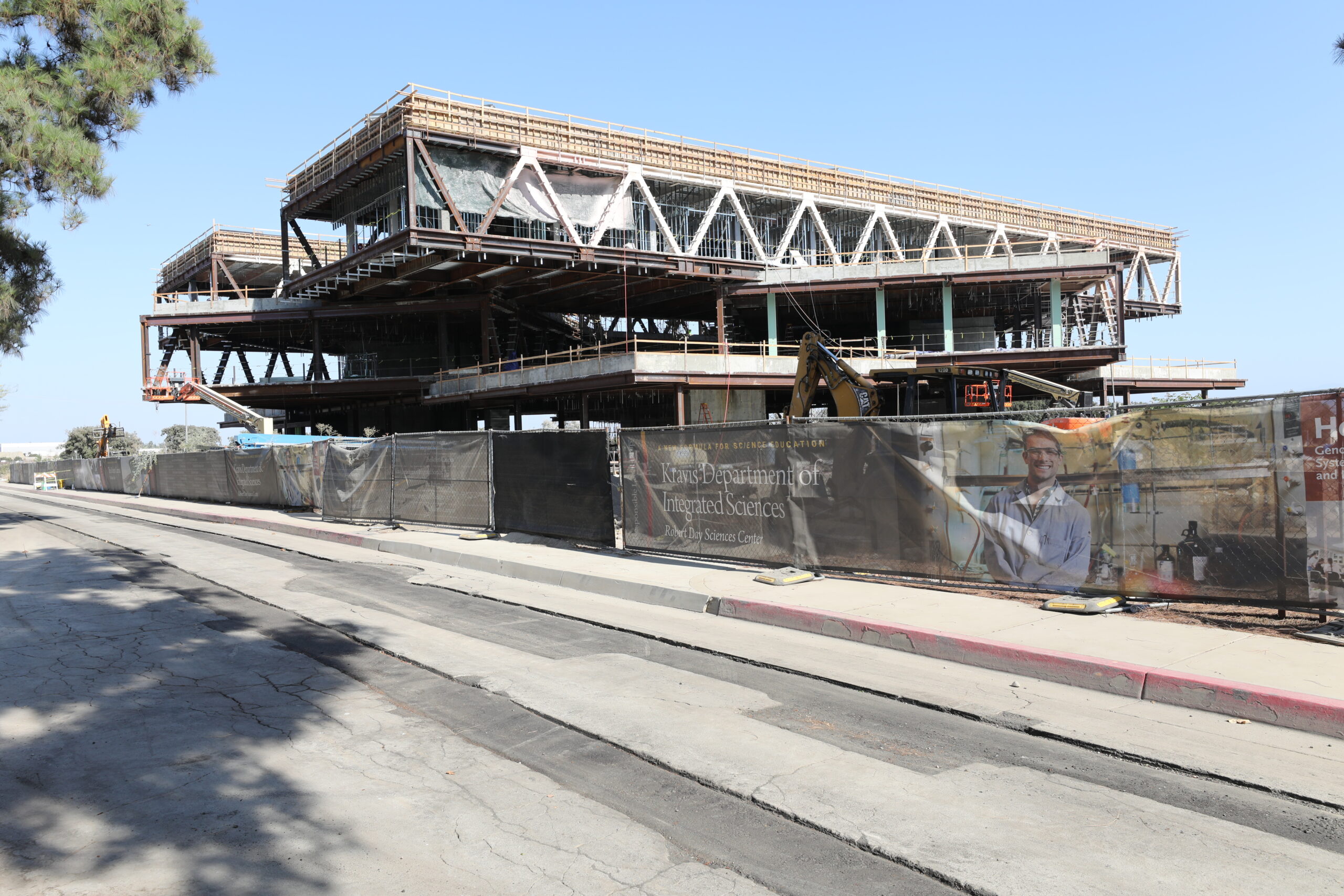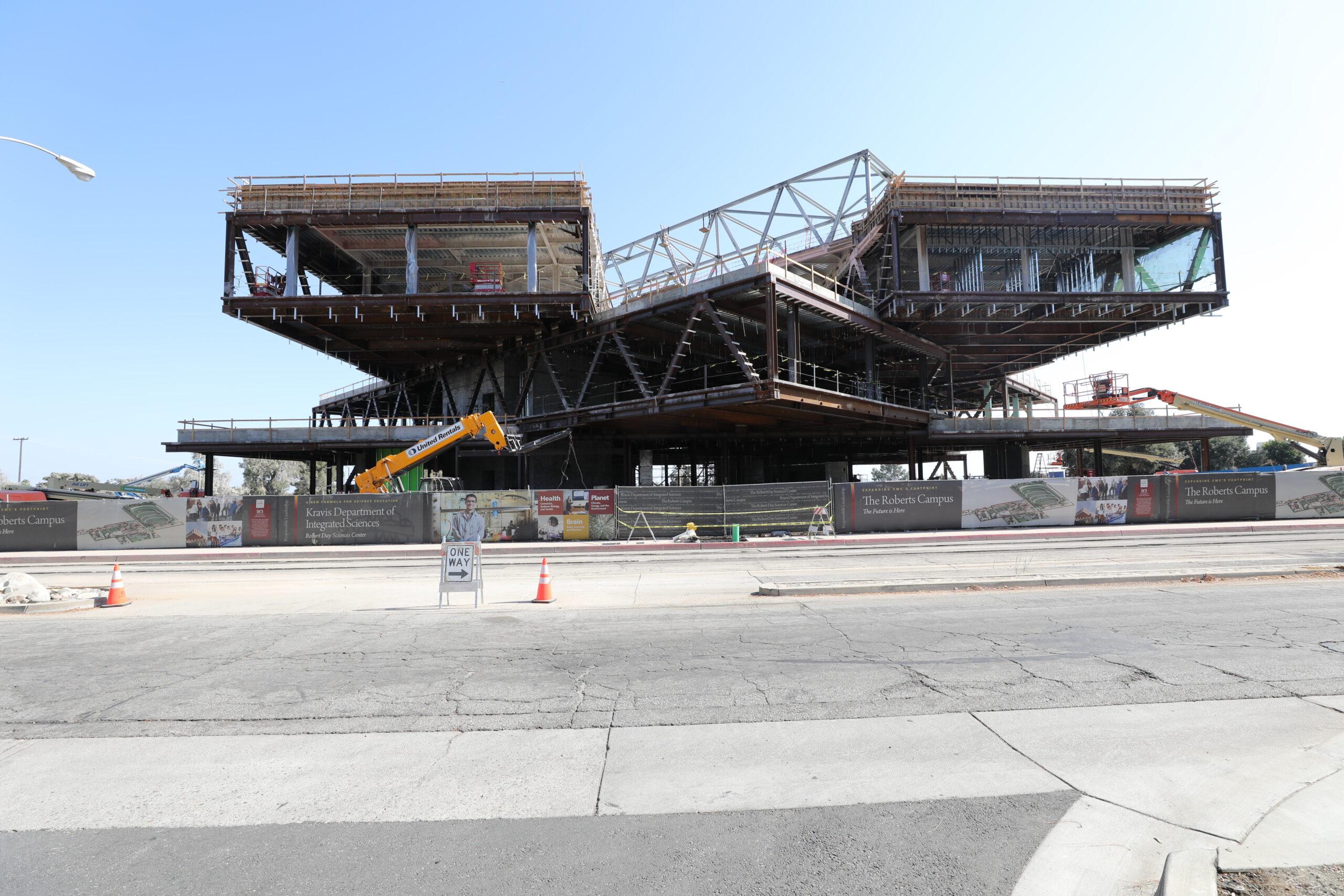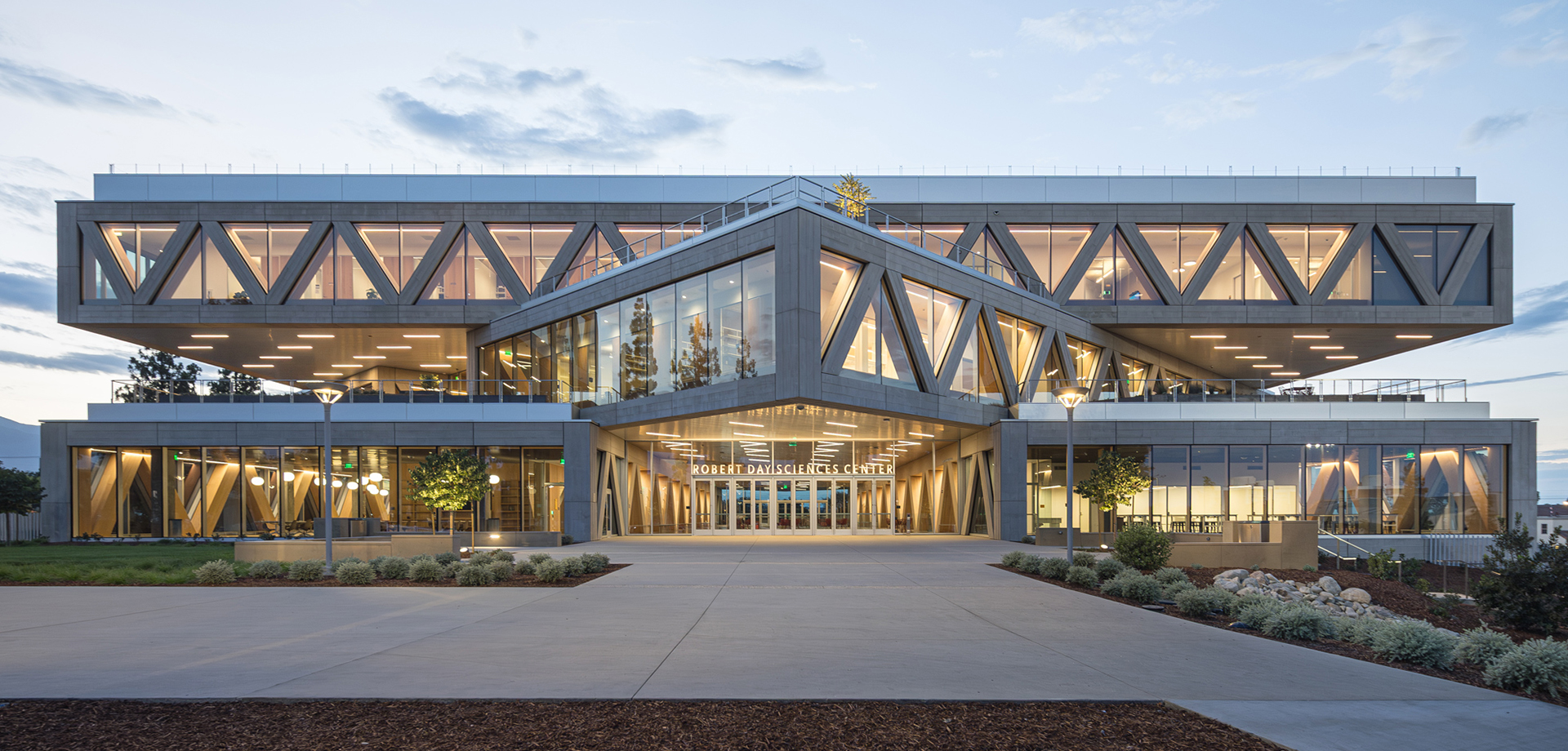
The new Robert Day Sciences Center at Claremont McKenna College is a 135,000 square foot, four-level facility that dramatically transforms the College’s academic environment. It consolidates core disciplines—from sciences and computation to humanities and social sciences—creating a new home for the Kravis Department of Integrated Sciences. The innovative design, conceived by BIG, features stacked pairs of rectangular blocks, each rotated 45 degrees from the floor below, creating a visually dynamic structure. This continuous rotation around a central, light-filled atrium offers direct views into classrooms and research spaces, purposefully cultivating an atmosphere of interdisciplinary collaboration. The building’s exterior maximizes connection to the campus through eight terraces with 360-degree perspectives, green roof areas, and outdoor classrooms.
The project addressed significant engineering challenges inherent in its unique geometry, including limited vertical overlap between floors, 52-foot-long spans requiring a strict 2,000 mips vibration criterion, and a highly irregular floor configuration, all within an active seismic zone in Southern California.
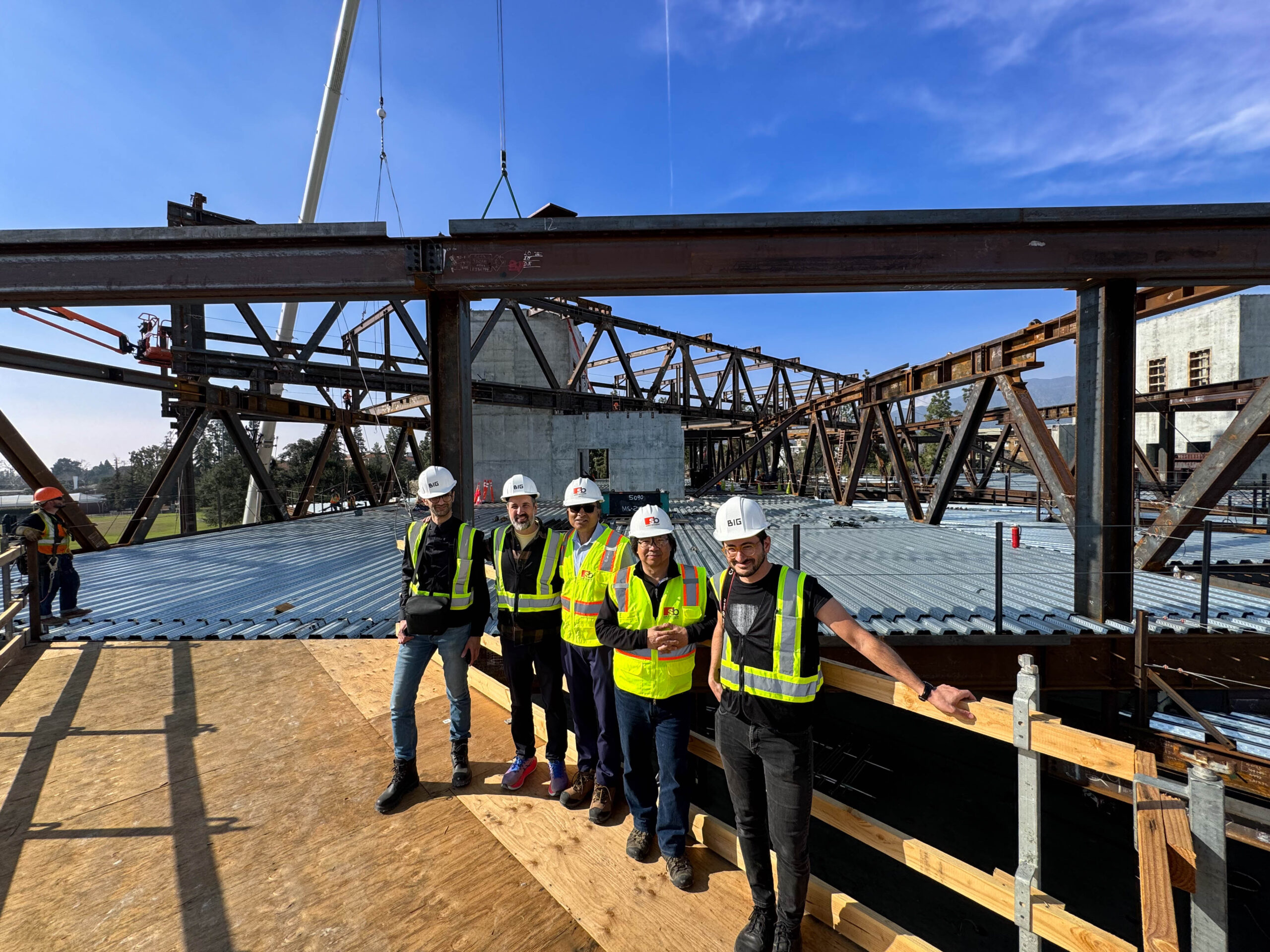
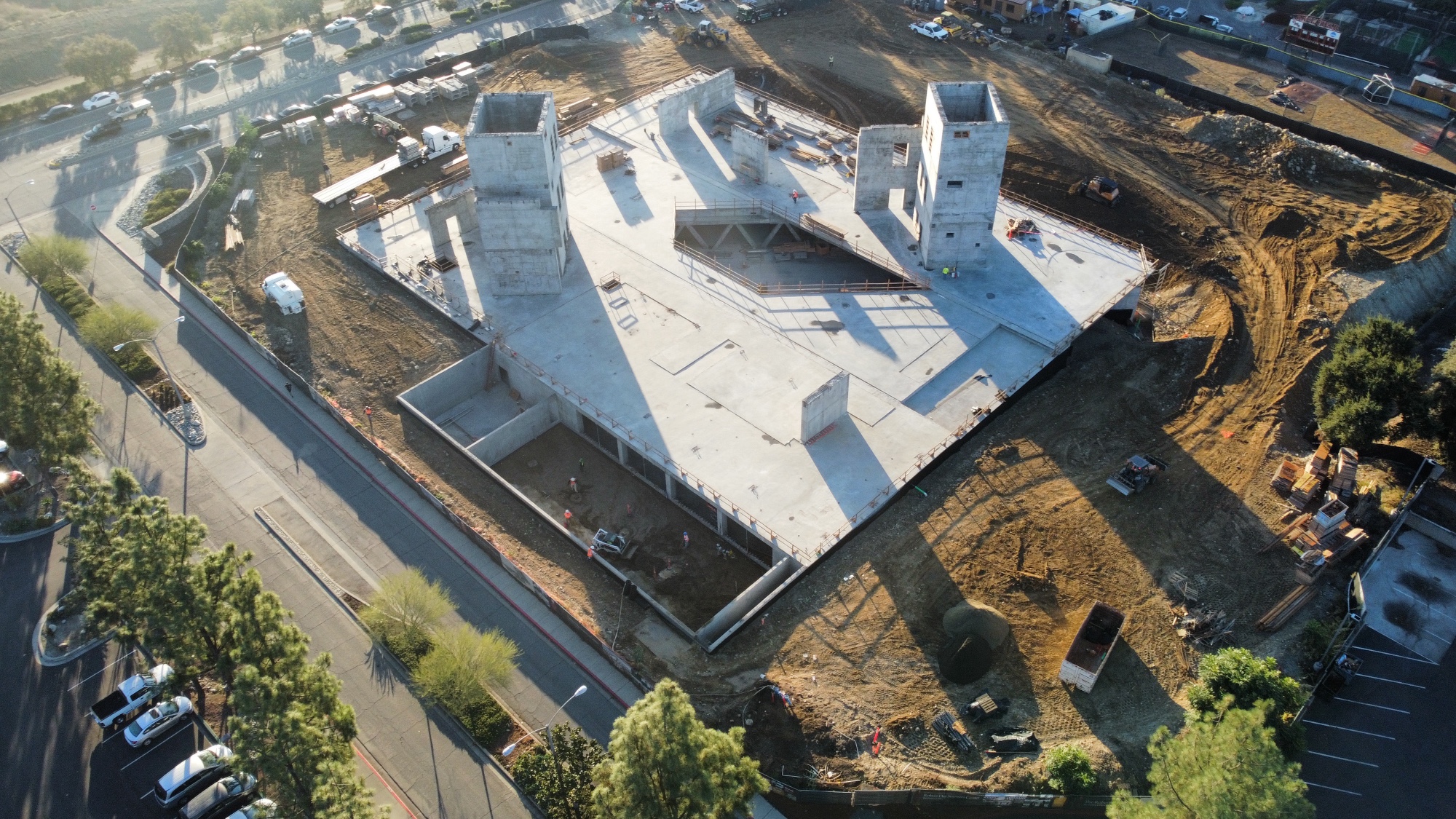
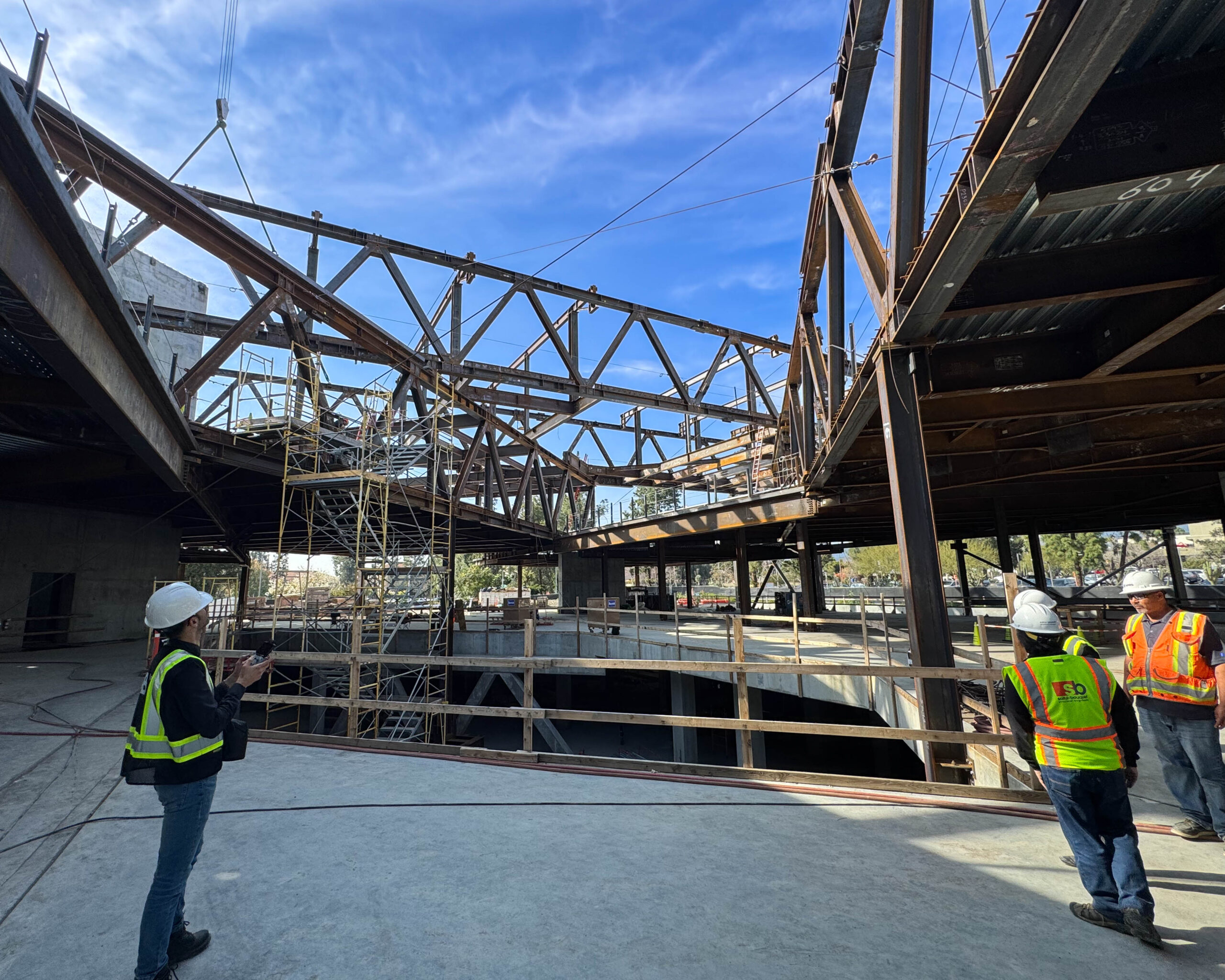
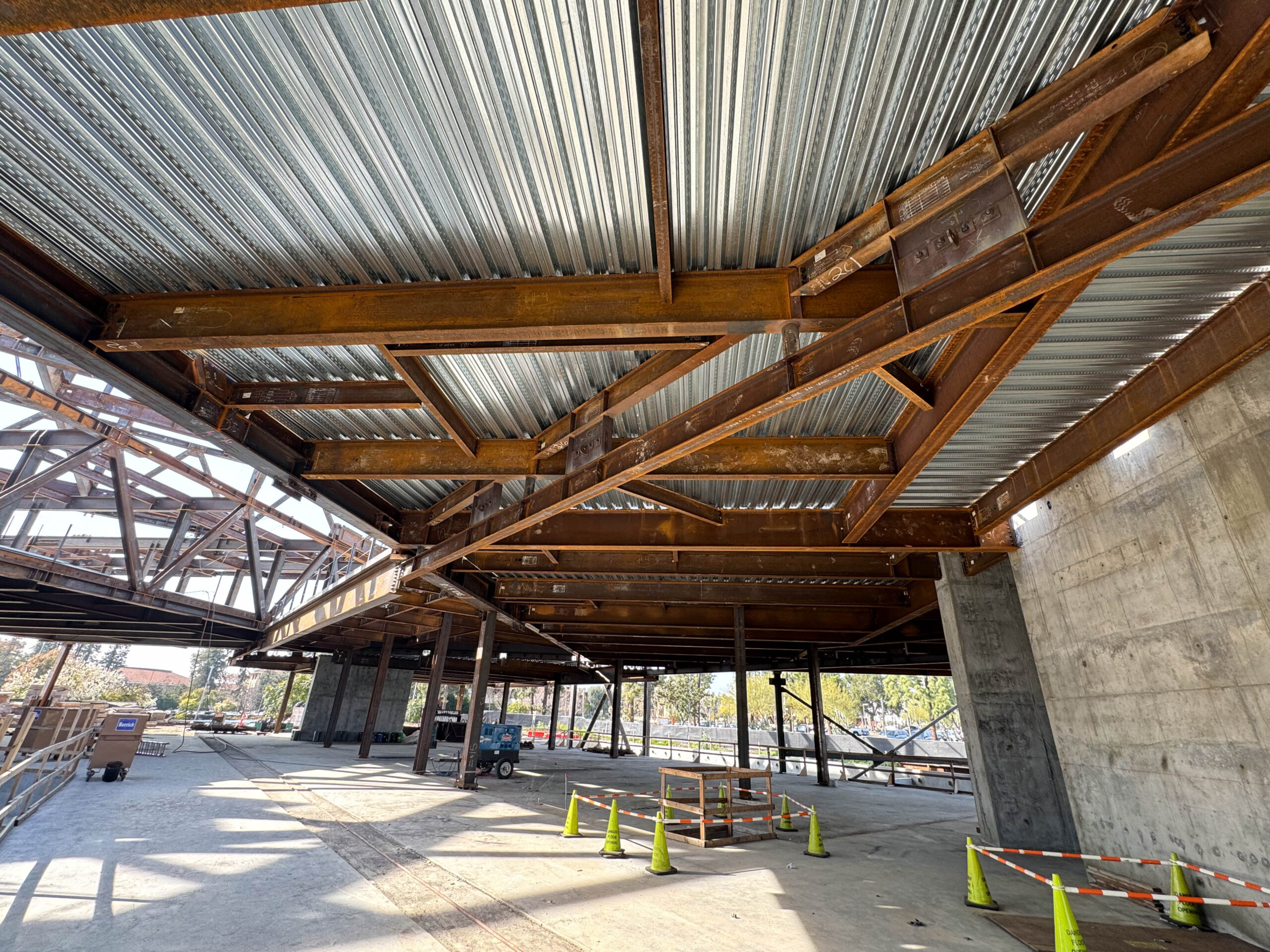
To realize BIG’s architectural vision, Saiful Bouquet engineered a hybrid structural system combining three steel levels over a concrete basement. The building’s primary gravity load is supported by a series of steel trusses running along the exterior length of each block. Seismic resistance and vertical continuity are provided by concrete core walls strategically placed in vertically overlapping zones. Additionally, a substantial portion of the floor area is designed to highly restrictive vibration criteria (2,000 to 4,000 mips) to ensure the stability necessary for cutting-edge research laboratories. The foundation is composed of conventional spread footings and localized mats at the core wall locations.
This landmark structure, having successfully navigated complex architectural and seismic requirements, embodies the innovative spirit of the Kravis Department of Integrated Sciences, providing an ideal setting to support pioneering research and propel future breakthroughs across all disciplines.
Awards
2026 Structural Engineers Association of Southern California (SEAOSC) | Award of Merit – New Construction